Contents
Is couscous gluten-free?
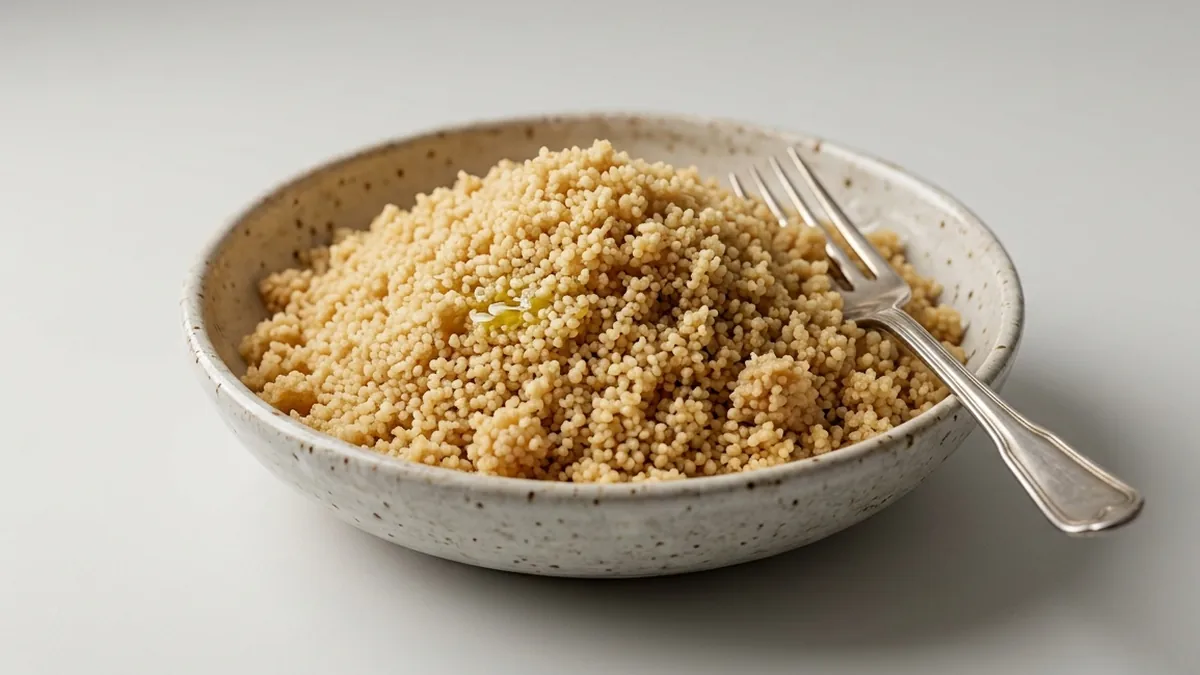
No. Couscous looks like a grain, but it's actually a tiny pasta made from durum wheat semolina, and it contains gluten.
Why it's easy to get wrong
Couscous resembles rice or a small grain, which is exactly why it's one of the more common mix-ups on a gluten-free diet. It isn't a grain at all: semolina is rolled with water into small granules, which makes it a wheat product by definition, not a starch that happens to come from wheat. Durum wheat semolina has a higher gluten content than standard wheat flour, which is part of why couscous holds its shape so well when cooked.
Israeli couscous is the same story
Israeli or pearl couscous, the larger, chewier version common in Mediterranean cooking, is also made from wheat semolina. Size and shape don't change the source grain — neither version is gluten-free.
Gluten-free couscous alternatives exist
A handful of brands make couscous-style products from corn, rice, or quinoa, styled and cooked the same way as traditional couscous. These are worth seeking out by name rather than assuming any couscous on a shelf or a menu is one of them — read the label, since "couscous" on its own defaults to wheat.
Practical guidance
Treat couscous on a restaurant menu or in a packaged salad the same way as pasta: assume wheat unless it's specifically labeled gluten-free. Quinoa, millet, rice, and riced cauliflower all work as direct substitutes in most couscous recipes.
FAQ
Is Israeli couscous different from regular couscous for gluten? No — both are made from durum wheat semolina.
What's a good gluten-free substitute for couscous? Quinoa is the closest in texture and cooking method, though rice, millet, and riced cauliflower also work well depending on the dish.
Sources
- Beyond Celiac, "Is Couscous Gluten-Free?"
- National Celiac Association, "Couscous"
- Bob's Red Mill Natural Foods, "Is Couscous Gluten Free?"