Contents
What Is Quinoa Flour?
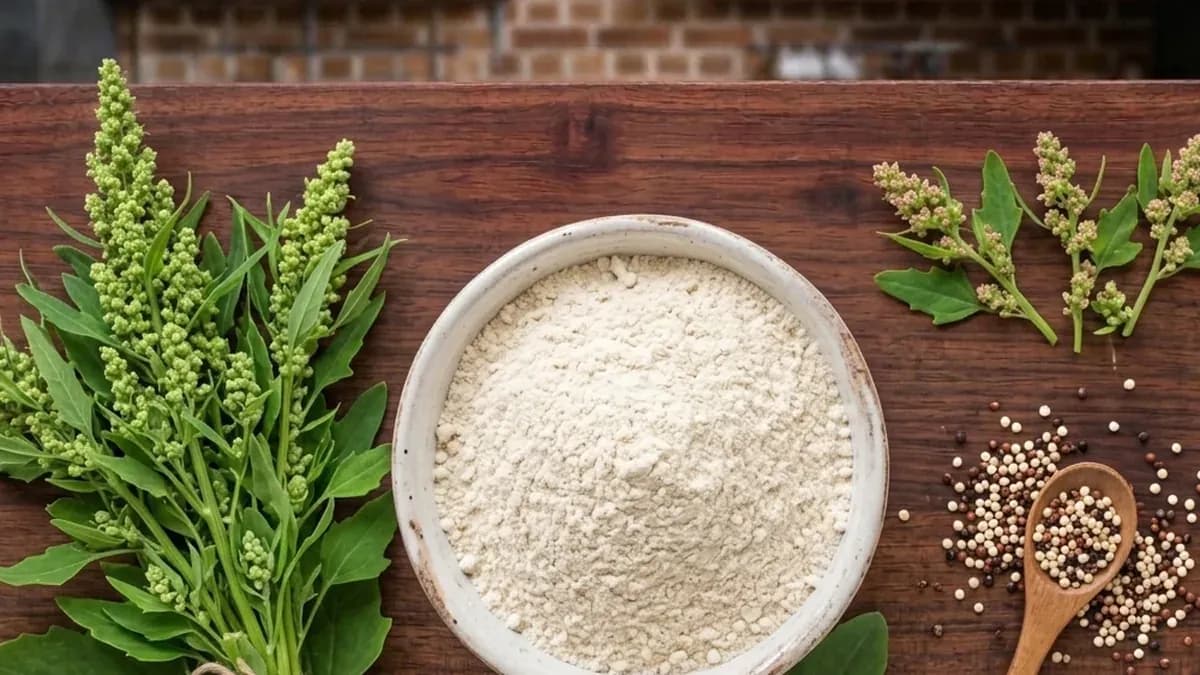
Quinoa flour is ground from the seeds of Chenopodium quinoa, a flowering plant native to the Andean region of South America. Despite the way it often gets grouped with whole grains on supermarket shelves, quinoa is not a grass — it is a pseudocereal, botanically closer to spinach and beets than to wheat or oats. Buckwheat shares this distinction, and like buckwheat, quinoa carries a naturally gluten-free profile that comes from its true identity as a seed rather than a cereal grain.
The plant has been cultivated in the Andes for thousands of years, valued by Andean cultures as a staple crop. Modern interest in quinoa has extended well beyond its whole seed form into flour, flakes, and puffed varieties. Quinoa flour is made by milling dried quinoa seeds into a fine or slightly coarse powder. The color is typically pale ivory to light tan, and the texture is relatively fine, though it may feel slightly heavier than rice flour when you run it between your fingers.
For gluten-free baking, quinoa flour is one of the more nutritionally useful options available.
Nutrition Basics
Quinoa's nutritional reputation rests largely on one fact: it is a complete protein source. That means it supplies all nine essential amino acids — the ones the human body cannot synthesize on its own. Most plant foods fall short on at least one or two essential amino acids, so quinoa's complete profile is a genuine standout, particularly for people who rely heavily on plant-based eating.
Beyond protein, quinoa flour retains much of what makes whole quinoa nutritious. It is a source of dietary fiber, iron, magnesium, phosphorus, and manganese. It also contains folate and a range of B vitamins. The fat content is modest but includes some beneficial unsaturated fatty acids.
For exact figures, see USDA FoodData Central.
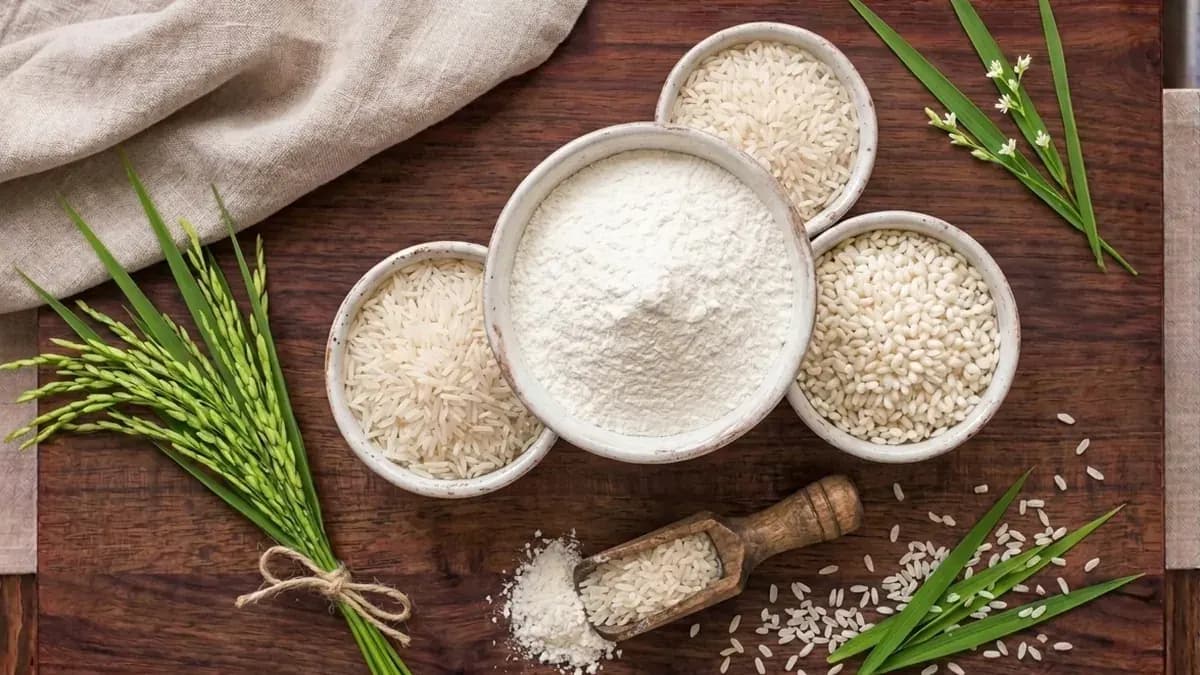
Compared to white rice flour, which is relatively low in protein and micronutrients, quinoa flour contributes meaningfully to the nutritional density of a baked good. If you are building a gluten-free blend and want it to do more than just hold a muffin together, quinoa flour is one of the better options for adding genuine nutritional value alongside structure.
One thing to be aware of: quinoa seeds are coated in naturally occurring compounds called saponins, which have a bitter, slightly soapy taste. Most commercial quinoa is pre-rinsed before sale or milling to remove these compounds, and quinoa flour is generally produced from pre-rinsed seeds. That said, the intensity can vary by brand, and a faintly bitter or earthy note is characteristic of quinoa flour even after rinsing. This is not a flaw — it is part of the flour's flavor identity — but it is worth understanding before you bake with it.
Baking Behavior
Quinoa flour has a mild, earthy flavor with a slight nuttiness and, depending on the brand, a subtle bitterness that lingers in the background. In small amounts this reads as depth; in larger amounts it can become assertive, which is why most bakers treat quinoa flour as a component of a blend rather than a solo flour.
Structurally, quinoa flour adds some density to baked goods. It does not have the lightness of white rice flour or the neutral starchiness of tapioca. It tends to produce a slightly heavier crumb, which can work beautifully in hearty applications — think sandwich bread, dense muffins, pancakes, waffles, flatbreads, and quick breads with strong flavors like banana, chocolate, or spice. In delicate applications like angel food cake or light sugar cookies, quinoa flour's weight and flavor can feel out of place.
One of its most compatible partners in a blend is almond flour. The two share a slightly nutty, earthy register, and almond flour's fat content helps counteract the dryness that quinoa flour can contribute. Together they produce baked goods with good moisture, satisfying density, and a flavor profile that feels cohesive rather than improvised.
Quinoa flour absorbs liquid moderately well and does not cause the gummy texture that too much tapioca starch can produce. It also tolerates heat reliably and does not require any special handling beyond what you would do with other alternative flours.
Substitution Ratios
Because of its weight and flavor intensity, quinoa flour works best when it makes up a portion of a larger blend rather than replacing all-purpose or other flours entirely.
A practical guideline: use quinoa flour at 25 to 30 percent of the total flour weight in a blend. At this level it contributes its nutritional and structural benefits without overwhelming the flavor of the finished bake. Pushing above 30 percent is possible in strongly flavored recipes — a dark chocolate brownie or a spiced carrot muffin can absorb more of quinoa's earthiness — but for most applications, staying at or below that threshold produces the most balanced results.
For direct substitution in an existing recipe that calls for a neutral gluten-free flour:
- Replacing rice flour — up to 25% of white rice flour or a neutral gluten-free blend can be replaced with quinoa flour on a 1:1 weight basis.
- Pairing with a starch — combine with tapioca, arrowroot, or potato starch to keep the texture from becoming too heavy.
- Blending with almond flour — a ratio of roughly equal parts quinoa and almond, filling 40 to 50 percent of the total flour weight, tends to work well for muffins and quick breads.
If a recipe tastes more bitter than expected, reduce the quinoa flour proportion and check whether your flour is from a brand that rinses before milling — not all do.
Cross-Contamination Notes
Quinoa is naturally gluten-free, and because it is not a grass crop, it does not share the close botanical relationship with wheat, barley, and rye that makes oats such a concern for people with celiac disease. In that sense, quinoa flour starts from a lower baseline risk than many other alternative flours.
However, lower risk is not zero risk. Cross-contamination can occur at any point in the supply chain: shared farming equipment used on wheat fields, shared transport and storage, or shared processing and milling facilities. Quinoa is often grown in regions where wheat is also cultivated, and smaller producers may not have dedicated gluten-free infrastructure.
For people who are sensitive to gluten but do not have celiac disease, this may not be a significant concern. For people with celiac disease, the standard guidance applies: look for quinoa flour that carries a certified gluten-free label from a recognized third-party organization. Under FDA rules any product labeled "gluten-free" must contain less than 20 parts per million of gluten, though that claim rests on the manufacturer's own assurance rather than mandatory testing. Certification adds independent verification and facility audits on top of it, and some certifiers work to a stricter limit — a meaningful extra layer of assurance beyond the crop's natural status.
Quinoa's own storage proteins have also been examined. A 2012 laboratory analysis of 15 cultivars found that most carried no measurable amount of the proteins known to trigger a celiac immune response, though two of them did. A later clinical study, in which adults with celiac disease ate quinoa daily for six weeks, found it well tolerated with no adverse reaction. The researchers called their results preliminary rather than conclusive, and this remains an open area of research. Is Quinoa Gluten-Free? covers it in more detail.
Store quinoa flour in an airtight container in a cool, dry place. Because of its fat content it can go rancid more quickly than very starchy flours — refrigerating or freezing it extends its shelf life noticeably, especially in warm climates.
Sources
- American Journal of Clinical Nutrition. Variable activation of immune response by quinoa (Chenopodium quinoa Willd.) prolamins in celiac disease. https://doi.org/10.3945/ajcn.111.030684 — accessed 24 August 2026
- Celiac Disease Foundation. Gluten Alternatives: Effects of Eating Quinoa in Celiac Patients. https://celiac.org/2014/02/12/gluten-alternatives-effects-of-eating-quinoa-in-celiac-patients/ — accessed 24 August 2026
- Journal of the American Dietetic Association. Gluten contamination of grains, seeds, and flours in the United States: a pilot study. https://pubmed.ncbi.nlm.nih.gov/20497786/ — accessed 24 August 2026
- Plant Foods for Human Nutrition. Nutritional quality of the protein in quinoa (Chenopodium quinoa, Willd) seeds. https://pubmed.ncbi.nlm.nih.gov/1546052/ — accessed 24 August 2026