Contents
What Is Corn Flour?
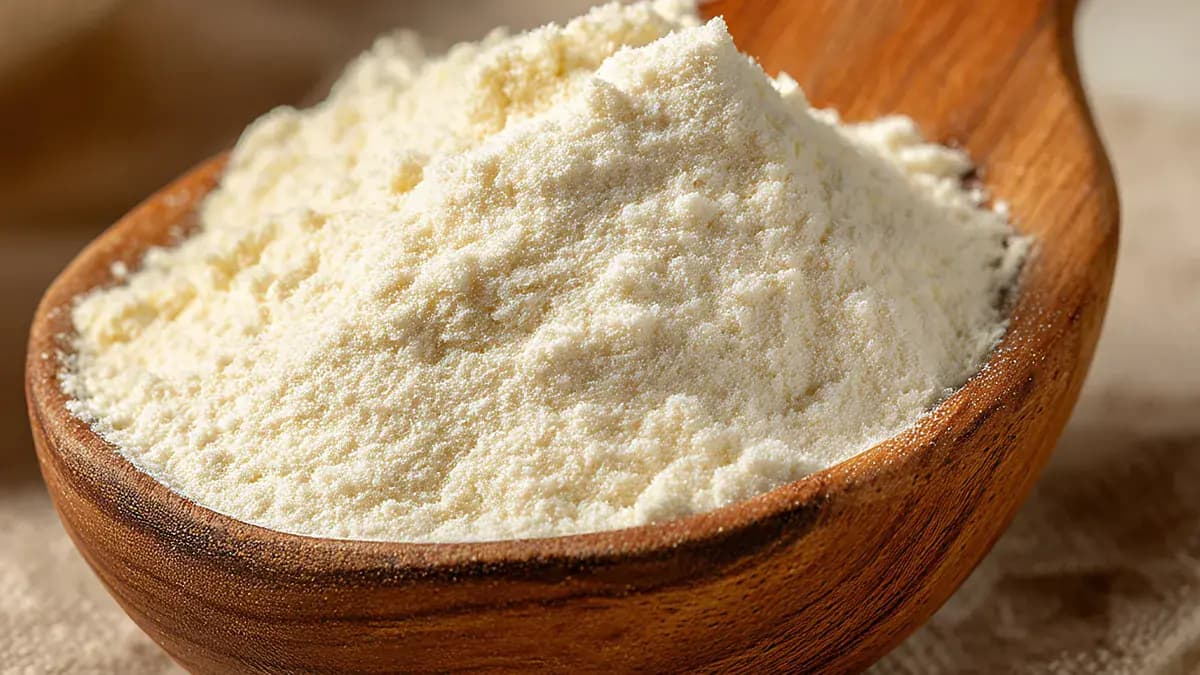
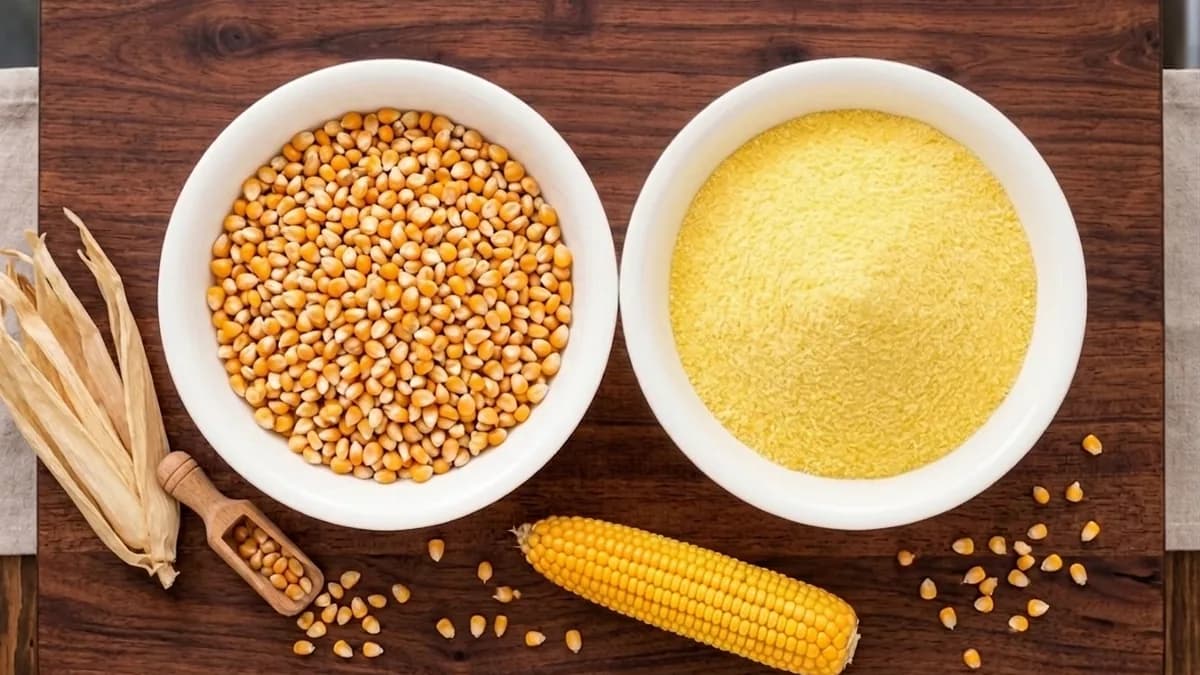
Corn flour is a finely ground powder made from dried whole corn kernels. It retains the bran, germ, and endosperm of the kernel, which gives it a pale yellow color (or white, depending on the variety used) and a mild, naturally sweet corn flavor.
One of the most common points of confusion around this ingredient is the terminology, which shifts depending on where you are in the world.
- Corn flour (UK and most of Europe) — a very fine, powdery flour ground from whole corn kernels. This is the product this article is about.
- Cornmeal (US and Canada) — a coarser grind of dried corn, think polenta or the gritty base of a traditional Southern cornbread. It is not interchangeable with fine corn flour in most recipes.
- Cornstarch (US) / Cornflour (UK in a different context) — pure starch extracted from the endosperm of the corn kernel. It contains almost no protein or fiber and is used primarily as a thickening agent. It has a completely different texture and baking function from corn flour.
When a recipe calls for "corn flour," it is worth confirming which of these three products is intended, particularly if you are working across UK and US sources. Throughout this article, "corn flour" refers specifically to the finely milled whole-grain product.
Corn is a naturally gluten-free crop. It belongs to the grass family but does not carry the proteins — gliadin and glutenin — that make wheat harmful to people with celiac disease or gluten sensitivity. In its pure, uncontaminated form, corn flour is safe for a gluten-free diet.
Nutrition Basics
Corn flour sits in an interesting nutritional space. Because it is ground from the whole kernel, it retains more nutrients than cornstarch, which has been stripped of everything except starch.
Corn flour provides:
- Carbohydrates — the dominant macronutrient, with a meaningful proportion coming from dietary fiber thanks to the retained bran.
- Moderate protein — though the protein in corn is incomplete and low in the amino acid lysine compared with wheat.
- Fat — primarily from the germ, in small amounts, mostly unsaturated.
- B vitamins — including thiamine (B1) and niacin (B3), which play roles in energy metabolism.
- Minerals — including magnesium, phosphorus, and iron.
- Antioxidants — such as carotenoids, which give yellow corn flour its color and are linked to eye health.
Yellow corn flour contains more carotenoids than white corn flour, making it the more nutritionally colorful option. White corn flour has a slightly more neutral flavor and a paler appearance, which some bakers prefer when they do not want the finished product to read as distinctly "corny."
Corn flour is not a low-carb ingredient and should be treated accordingly by anyone managing blood sugar.
For exact figures, see USDA FoodData Central.
Baking Behavior
Corn flour behaves quite differently from wheat flour in the oven, and understanding that difference is the key to using it well.
Because corn flour contains no gluten, it cannot form the stretchy protein network that gives wheat-based baked goods their chew and structure. Batters and doughs made with corn flour alone will not hold together in the same way. What corn flour does instead is produce a baked result that is light, crumbly, and pleasantly crispy — a quality that is a genuine asset in the right applications and a problem in the wrong ones.
Where corn flour excels:
- Tortillas and flatbreads — masa harina (a specific nixtamalized corn flour) is the traditional base for corn tortillas, but fine corn flour can work for unleavened flatbreads with good results.
- Cornbread — whether you prefer a dense Southern-style brick or a lighter, slightly cakey version, corn flour contributes that characteristic corn flavor and a tender, slightly grainy crumb.
- Coatings and batters — corn flour makes an excellent crispy coating for fried chicken, fish, or vegetables. It crisps up faster than wheat flour and stays crunchier for longer.
- Pancakes and crepes — a partial corn flour blend produces pancakes with a golden color, a slightly denser texture, and a sweet corn flavor that pairs especially well with fruit.
- Polenta-style bakes — corn flour can stand in for finer-ground polenta in baked dishes, producing a softer set.
Where to be careful:
Corn flour absorbs moisture readily and can produce a dry, dense result if used in too high a proportion in a recipe designed around wheat flour. In cakes, muffins, and quick breads, overuse of corn flour without compensating with extra liquid or fat leads to a crumbly texture that falls apart rather than slices cleanly. It works best as part of a blend.
Substitution Ratios
Corn flour is most useful as a partial substitute rather than a one-for-one replacement for wheat flour. Here are practical starting points:
| Application | Corn flour proportion | Notes | |---|---|---| | Pancakes | Up to 50% of the total flour | Adds color and flavor; pair with a starchy flour for structure | | Cornbread | 50–100% | Traditional recipes often use it at full strength | | Cakes and muffins | 20–30% | Higher ratios make the crumb too dry and crumbly | | Crispy coatings / batters | 100% | Outstanding performance; no blending needed | | Thickening sauces | Not recommended | Use cornstarch instead for this purpose |
When substituting corn flour into a standard wheat-flour recipe, increase the liquid in the recipe by roughly 10–15% to compensate for the extra moisture absorption. Adding a binding agent — such as a flax egg, psyllium husk, or xanthan gum — helps provide the structural cohesion that gluten would otherwise supply.
For tortillas, if fine corn flour rather than traditional masa harina is your starting point, add a small amount of lime juice or use nixtamalized corn flour for a flavor and texture closer to the authentic product.
Cross-Contamination Notes
Risk level: Moderate
Corn is naturally gluten-free, but the risk of cross-contamination in the supply chain is real and worth taking seriously, particularly for people with celiac disease, whose tolerance for even trace gluten is extremely low.
The main contamination risks are:
- Shared fields — corn is frequently grown in rotation with wheat, barley, or rye. Harvesting equipment used across crops can carry over residual grain unless thoroughly cleaned.
- Shared transport and storage — grain silos, trucks, and processing equipment in conventional facilities handle multiple grains and may not be cleaned between runs.
- Shared milling facilities — many mills process both wheat and corn. Unless the corn flour is milled in a dedicated gluten-free facility, the risk of cross-contact is significant.
For people with celiac disease or severe gluten sensitivity, the safest approach is to choose corn flour that is:
- Certified gluten-free by a recognized third-party organization (such as GFCO, Coeliac UK-approved, or equivalent in your region).
- Produced in a dedicated gluten-free facility, not just a facility that claims to clean between runs.
For people without celiac disease or medically significant gluten sensitivity, standard supermarket corn flour is generally acceptable. But for anyone whose health depends on strict avoidance, certification and dedicated production are non-negotiable.
Always check the packaging for advisory statements such as "may contain wheat" or "produced in a facility that also processes wheat," as these are meaningful signals for the celiac community.