Contents
What Is Teff Flour?
Teff is one of the oldest cultivated grains on earth, with roots stretching back thousands of years in the highlands of Ethiopia and Eritrea. Despite being called a grain, teff is technically a grass seed — an annual cereal grass in the family Poaceae whose seeds are tiny enough that a single teaspoon can hold thousands of them. That diminutive size is actually part of teff's enduring appeal: the seeds are too small to hull efficiently, which means the whole grain — bran, germ, and endosperm — is always eaten intact. Nothing gets stripped away.
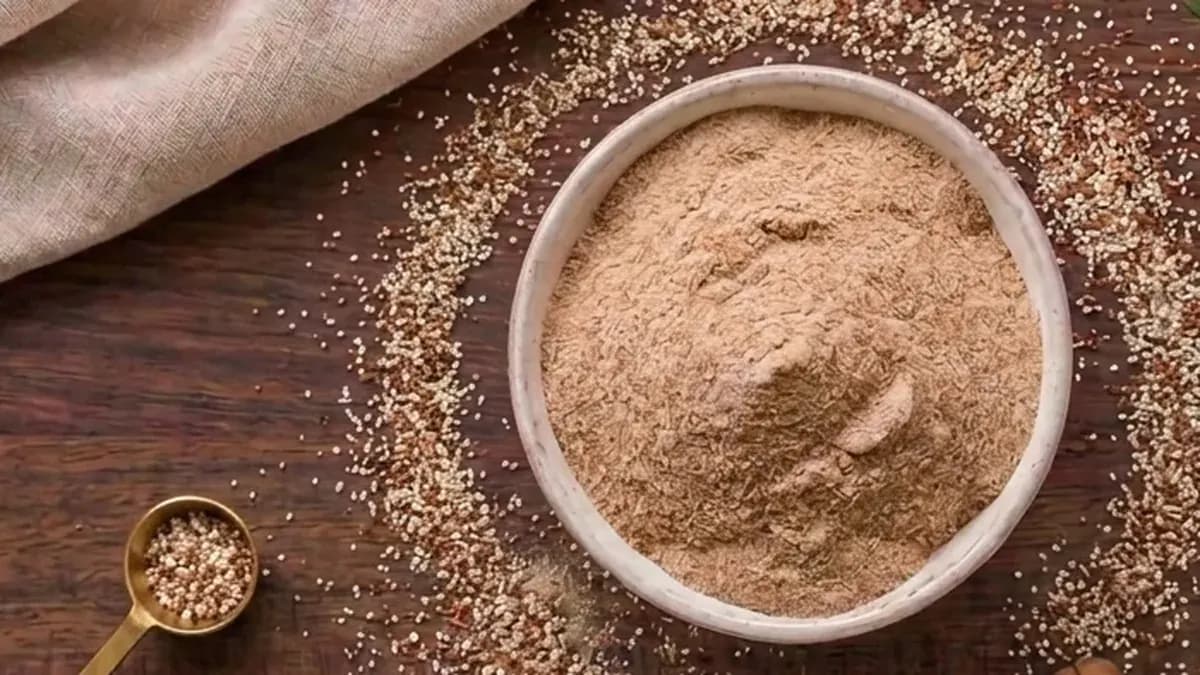
Teff flour is made by milling those whole seeds into a fine powder. It comes in two main varieties based on seed color: dark (or brown) teff, which has a deeper, earthier flavor with notes reminiscent of dark chocolate or molasses, and ivory (or light) teff, which is milder and more neutral. Both are naturally gluten-free, making teff flour one of the more interesting options available to gluten-free bakers who want real flavor complexity rather than a blank canvas.
In Ethiopian and Eritrean cuisine, teff has long been the backbone of injera, the spongy, tangy sourdough flatbread that serves as both plate and utensil at the table. Injera relies on teff's mild fermentability and its ability to produce a distinctively open, bubbly crumb. Outside its traditional context, teff flour has found a second life in gluten-free and health-conscious baking around the world.
Nutrition Basics
Teff earns a strong reputation nutritionally, and for good reason. Compared to many other gluten-free flours, it offers a notably well-rounded profile rather than being strong in one area and thin in others.
Iron is the headline mineral. Teff is one of the better plant-based sources of iron available in a flour form, a meaningful advantage for people eating gluten-free who may already be navigating dietary restrictions. Calcium is another standout — teff contains more calcium than most grains, which makes it useful in diets that rely on variety for bone health rather than dairy alone. Fiber content is higher than refined wheat flour and most starch-heavy gluten-free alternatives, largely because the whole grain is always present. This contributes to better satiety and a lower glycemic impact than flours made primarily from starches.
Protein content is solid as well, sitting in a range comparable to oats or corn flour, though below something like chickpea flour. Teff also provides a range of B vitamins and magnesium. Because the bran is always included, the flour retains more of the seed's natural micronutrients than a refined flour ever could.
For exact figures, see USDA FoodData Central.
One thing worth noting: teff contains phytic acid, as most whole grains do. Soaking, fermenting, or cooking with acid (such as in a buttermilk-style quick bread) can help reduce phytate levels and improve mineral absorption.
Baking Behavior
Teff flour has a personality that is hard to mistake. Its flavor is pronounced — rich, slightly sweet, earthy, with that characteristic molasses-like depth — and that flavor will assert itself in the finished product. This is both its greatest strength and the thing that requires the most thought when you work with it.
Texturally, teff adds density and moisture retention to baked goods. It tends to produce a tight, moist crumb rather than a light and airy one. This makes it exceptionally well-suited to quick breads, muffins, dense cakes, brownies, waffles, and pancakes, where a hearty, satisfying texture is an asset rather than a liability. It is less ideal in applications where you want a delicate, feather-light crumb.
Teff flour works best as a partial flour in a blend rather than as the sole flour in a recipe. A ratio of 25 to 30 percent teff flour within a broader gluten-free flour blend is a reliable starting point. At that proportion, you get the flavor and nutritional benefits without overwhelming the structure or making the product too heavy. Pushing much beyond 30 percent tends to produce baked goods that are noticeably dense and strongly flavored unless that is specifically the intention — think dark, fudgy brownies or hearty seeded loaves where bold character is welcome.
Teff flour absorbs liquid readily and can tighten a batter fairly quickly, so it helps to mix teff-containing batters efficiently and not overwork them. Baked goods made with teff tend to stay moist for longer than those made with lighter flours, which is a genuine advantage for shelf life.
Substitution Ratios
Because teff has a dominant flavor profile, substituting it for other flours requires a lighter hand than you might use with something like rice flour or oat flour.
As a direct substitution within a gluten-free blend, replacing up to 25 percent of the total flour weight with teff flour is the safest approach for recipes where you want teff's nutrition without dramatically altering the taste. For baked goods where a richer, earthier flavor is desirable — banana bread, carrot cake, zucchini muffins, spice cookies — you can push toward 30 to 35 percent and the flavor will complement rather than compete.
Pairing teff with neutral-flavored gluten-free flours works well. White rice flour, tapioca starch, and potato starch all provide a counterbalance to teff's richness. Sorghum flour, which has its own mild nuttiness, pairs particularly well with teff for heartier breads and pancake batters. Avoid combining teff at high ratios with other strongly flavored flours like buckwheat or chickpea flour unless you are deliberately building a complex, assertive base.
For those converting a conventional wheat recipe, start by substituting teff for roughly 20 to 25 percent of the total wheat flour called for, filling the rest with a suitable gluten-free blend. Increase the proportion gradually in subsequent batches once you have a feel for how the flavor and texture land.
Cross-Contamination Notes
Teff is inherently gluten-free — the grain itself contains no gluten proteins. In its native context, grown and processed in Ethiopia or Eritrea, it is rarely in contact with gluten-containing grains. However, as teff flour is increasingly processed and packaged in facilities that also handle wheat, barley, rye, or oats, the risk of cross-contamination during milling, packaging, or transport becomes a real consideration for people with celiac disease or gluten sensitivity.
The practical guidance is straightforward: always look for a certified gluten-free label. Under FDA rules, any food labeled "gluten-free" must contain less than 20 parts per million of gluten — the lowest level that can be reliably detected by validated testing methods, and the same threshold used by regulators in most other countries. That claim is voluntary and rests on the manufacturer's own assurance; the FDA does not require testing to make it. Third-party certification is the layer that adds independent testing and facility audits on top, and some certifiers work to a stricter limit than 20 ppm. A certified label removes the guesswork about facility practices.
Not all teff flour on the market carries certified gluten-free status, so it is worth reading packaging carefully rather than assuming that "naturally gluten-free" is equivalent to "safe for celiac disease." For most people with mild gluten sensitivity, the risk from non-certified teff flour may be low, but for those with celiac disease, certification is the appropriate standard to require.
Dedicated gluten-free brands that source and process teff in segregated facilities offer the lowest risk profile and are worth seeking out.
Sources
- U.S. Food and Drug Administration. Gluten and food labeling — accessed 24 August 2026