Contents
What Is Buckwheat Flour?
Despite what the name strongly implies, buckwheat has absolutely nothing to do with wheat. It is not a grain, not a grass, and not a relative of wheat in any botanical sense. Buckwheat (Fagopyrum esculentum) is a flowering plant whose seeds are used as food, placing it in the category of pseudocereals alongside quinoa and amaranth. Its closest relatives are sorrel and rhubarb, which tells you something about how misleading common names can be.
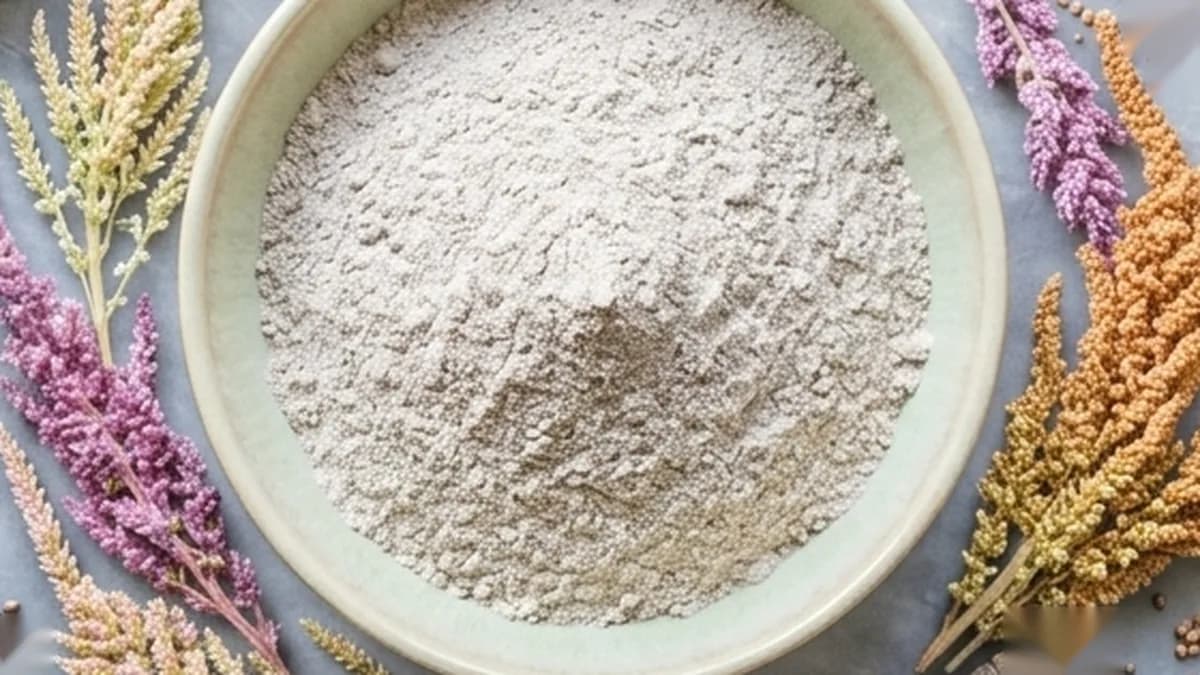
Buckwheat flour is made by milling those seeds, called groats, into a powder. Depending on whether the groats are hulled before milling, you get a lighter or darker flour. Light buckwheat flour (made from hulled groats) has a milder flavor and a pale tan color. Dark buckwheat flour retains some of the hull and produces a flour with a deep gray-brown color and a far more assertive, earthy, almost mineral-like flavor.
That bold flavor is buckwheat's defining characteristic. It has been used for centuries in traditional cuisines around the world: French galettes bretonnes (the savory crepes from Brittany), Japanese soba noodles, Eastern European blini, and Russian kasha all rely on buckwheat's distinctiveness. These dishes do not merely tolerate buckwheat's flavor — they are built around it. That context is worth keeping in mind when you bake with it, because buckwheat is not a neutral flour looking to fit in quietly.
It is naturally gluten-free, though cross-contamination in processing is a significant risk — see below.
Nutrition Basics
Buckwheat flour earns genuine respect in the nutrition world, and not just because it happens to be gluten-free. It is a notably good source of plant-based protein. Buckwheat contains all nine essential amino acids, including lysine — the one most cereals lack. That gives it an unusually strong protein profile for a grain-like food, though lysine is still its limiting amino acid against the strictest reference standards. It is also high in dietary fiber, which supports digestive health and contributes to a slower blood sugar response compared to refined flours.
On the mineral front, buckwheat is rich in magnesium, manganese, copper, and phosphorus. It also contains rutin, a flavonoid antioxidant that has been studied for its potential cardiovascular benefits. The overall nutrient density is meaningfully higher than many refined gluten-free starches like tapioca or white rice flour.
For exact figures, see USDA FoodData Central.
Buckwheat flour is naturally gluten-free in its pure form. However — and this is critical — natural gluten-free status does not mean safe for celiac disease without further scrutiny. See the cross-contamination section for the full picture.
Baking Behavior
Buckwheat flour behaves in ways that set it apart from most other gluten-free flours, and the first thing to understand is its flavor intensity. It is robust enough to overpower other ingredients if used in large quantities. The earthy, nutty, slightly bitter notes are a feature in the right recipe, but they can easily dominate a baked good that is not designed to handle them.
Because buckwheat contains no gluten, it does not provide structure on its own. It also absorbs liquid differently than wheat flour — buckwheat flour can absorb a significant amount of moisture, which affects hydration ratios in recipes.
Buckwheat flour performs best when blended with other flours rather than used as a one-to-one standalone replacement. In a blend, it contributes flavor, color, fiber, and some protein without overwhelming the final product. It works particularly well in recipes that benefit from a hearty, rustic quality: pancakes, crepes, waffles, quick breads, muffins, and crackers are all natural fits. For soba noodles, it is commonly used at much higher ratios, sometimes up to 100%, though binders and technique matter greatly.
The dark color of buckwheat flour will noticeably affect the appearance of baked goods, giving them a gray-brown hue. This is perfectly fine in a hearty pancake or a savory crepe but may be unwelcome in a delicate vanilla layer cake.
Best Applications
- Pancakes and waffles — the classic use; buckwheat's hearty flavor is at home in breakfast baking.
- Crepes and galettes — savory Brittany-style galettes are traditionally made entirely with buckwheat flour.
- Soba-style noodles — used at high ratios, sometimes up to 100%, with careful technique and binding.
- Blini — the traditional Eastern European yeasted pancake built around buckwheat's character.
- Rustic quick breads and crackers — at 20–30% of a blend, buckwheat adds depth, color, and fiber.
Substitution Ratios
Buckwheat's strong flavor limits how aggressively it can be substituted into recipes without reshaping the final dish. A recipe that calls for a neutral gluten-free flour blend cannot simply swap in buckwheat flour at a one-to-one ratio without a significant change in taste and color.
As a general guideline, buckwheat flour works well as a partial component in a gluten-free blend, typically making up 20 to 30 percent of the total flour weight. At that range, it adds character and nutrition without completely dominating. For recipes where a more pronounced buckwheat flavor is desirable — rustic pancakes, savory galettes, or soba-style noodles — the proportion can be increased to 40 to 50 percent or higher, provided you are working from a recipe specifically developed for that ratio.
If you are adapting a recipe that uses a light gluten-free flour blend, start by replacing 20 to 25 percent of that blend with buckwheat flour and adjust from there based on taste and texture. Keep in mind that you may need to tweak liquid quantities slightly, as buckwheat flour can absorb more moisture than some lighter starches.
Cross-Contamination Notes
This is arguably the most important section for anyone managing celiac disease or a serious gluten sensitivity. Buckwheat flour carries a high risk of gluten cross-contamination.
The problem is not with buckwheat itself — the plant is inherently gluten-free. The problem is with how it is grown and processed commercially. Buckwheat is frequently grown in rotation with wheat, barley, or rye on the same fields. It is often harvested with shared equipment, transported in shared vehicles, stored in shared silos, and milled on shared equipment. At any one of those points, wheat contamination can occur.
Testing of unlabeled naturally gluten-free flours found buckwheat flour at 65 ppm — more than three times the 20 ppm limit. This is not a theoretical risk. Buy certified gluten-free buckwheat flour only.
The only reliable safeguard is to purchase buckwheat flour that is certified gluten-free by a recognized third-party organization. Certification requires testing to confirm gluten levels below a specified threshold (typically below 20 parts per million). The label "naturally gluten-free" on a package of buckwheat flour means nothing without that certification, because it refers only to the ingredient itself, not to how it was handled.
When in doubt, contact the manufacturer directly and ask about their testing protocols and dedicated facility status.
Frequently Asked Questions
Is buckwheat related to wheat?
No. Despite the name, buckwheat is a pseudocereal whose closest relatives are sorrel and rhubarb. It contains no gluten in its pure form.
Is buckwheat flour safe for people with celiac disease?
Buckwheat itself is gluten-free, but commercially milled buckwheat flour carries a high cross-contamination risk from shared fields, transport, and milling equipment. Only certified gluten-free buckwheat flour is a safe choice for people with celiac disease.
What is the difference between light and dark buckwheat flour?
Light buckwheat flour is milled from hulled groats and has a milder flavor and pale tan color. Dark buckwheat flour retains some of the hull, giving it a deeper gray-brown color and a stronger, earthier flavor.
Sources
- Thompson T, Lee AR, Grace T. Gluten contamination of grains, seeds, and flours in the United States: a pilot study. J Am Diet Assoc. 2010;110(6):937-940. https://pubmed.ncbi.nlm.nih.gov/20497786/ — accessed 14 July 2026
- Mass General Brigham. Spotlight on Plant Based Proteins. https://www.massgeneral.org/news/article/spotlight-on-plant-based-proteins — accessed 14 July 2026