Contents
What Is Amaranth Flour?
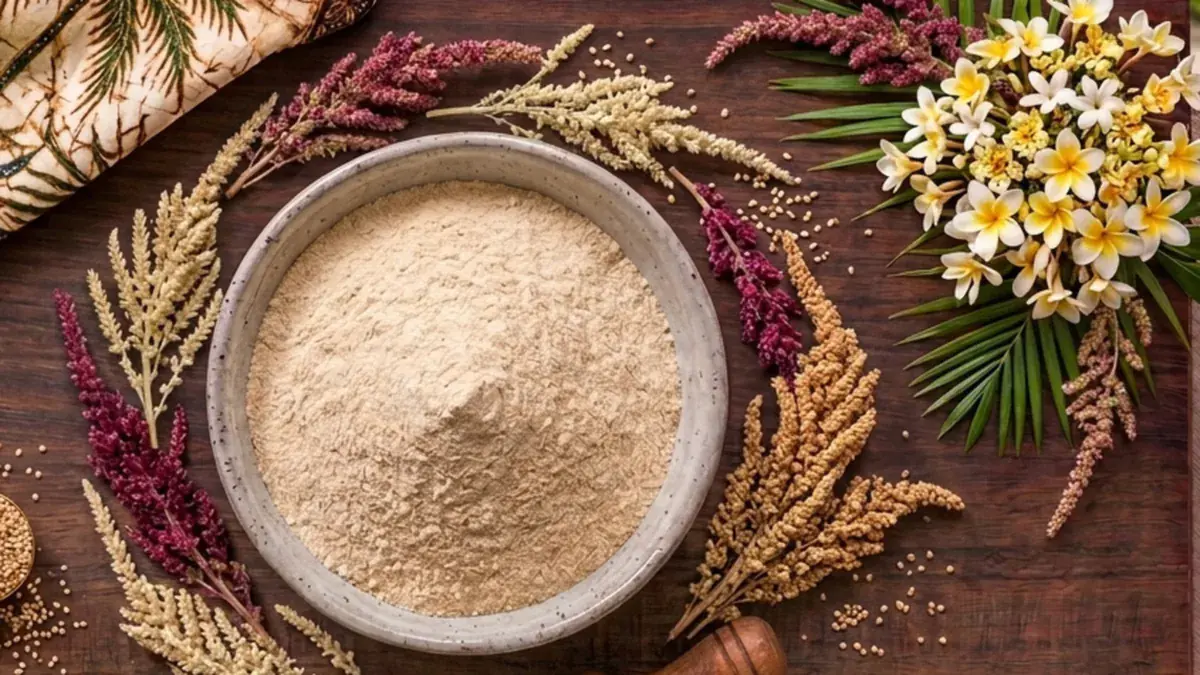
Amaranth flour is made from finely ground amaranth seeds — the tiny, bead-like seeds of a flowering plant cultivated for millennia by Aztec and Inca civilizations in the Americas. Today it is grown across the Americas, India, and East Africa. The seeds are uncommonly nutritious for a plant food, and the flour carries those nutritional benefits into baking.
The flour is cream to light golden in color and has a distinctively earthy, slightly peppery, and sometimes grassy flavor — more assertive than rice flour or millet flour and with a character that invites comparison to buckwheat flour, though the two taste quite different on close inspection. Amaranth flour is not a wallflower ingredient; its flavor will make itself known in a finished bake.
Technically, amaranth is a pseudocereal — like quinoa and buckwheat, it is a flowering plant whose seeds are used like a grain, rather than a grass (true cereal). This distinction is botanically significant but practically irrelevant in the kitchen; amaranth flour behaves like a grain flour and is used the same way.
Nutrition Basics
Amaranth flour is one of the most nutritionally impressive gluten-free flours available:
Protein — among the highest of any gluten-free flour. Amaranth contains all nine essential amino acids, including lysine, which is limiting in most grains. This makes amaranth protein of unusually high biological value.
Iron and calcium — amaranth is a notable source of both minerals, rivaling or exceeding many other plant foods.
Magnesium and phosphorus — present in meaningful quantities, supporting bone health and energy metabolism.
Fiber — higher than most refined gluten-free alternatives, supporting digestive health.
Fat — modest amounts of unsaturated fat, including omega-3 fatty acids — unusual for a flour.
For exact figures, see USDA FoodData Central.
Amaranth flour also contains squalene (an antioxidant), phytosterols (plant compounds that may support cardiovascular health), and a range of polyphenol antioxidants. For a gluten-free diet, which can sometimes be nutritionally incomplete, amaranth flour is a genuinely useful addition.
Baking Behavior
Amaranth flour's baking properties are more challenging than its nutritional profile might suggest. Understanding its character will save considerable frustration.
Strong flavor — amaranth's earthy, slightly bitter, grassy flavor is prominent. In small proportions (up to about 25% of a flour blend), it adds complexity and depth without becoming overwhelming. At higher proportions, it can dominate and make baked goods taste noticeably "healthy" in a way not everyone enjoys. Sweet spices (cinnamon, cardamom, vanilla) pair well with it and moderate its earthiness.
Dense and moist — amaranth flour absorbs moisture quickly and bakes into dense, moist crumbs. It is not a flour that produces light, airy results on its own. Used at too high a proportion, it can make breads and cakes gummy or heavy.
Good binding — compared to many gluten-free flours, amaranth flour has relatively good binding properties, partly because of its protein content. It may reduce the amount of xanthan gum or other binders needed in a recipe.
Crust formation — amaranth flour helps create a firmer, somewhat crisper outer crust in baked goods — useful in breads and cracker applications.
Blending — the standard recommendation is to use amaranth flour at 15–25% of the total flour weight in a gluten-free blend, paired with lighter flours such as rice flour, tapioca flour, or potato starch. This adds nutritional value and depth of flavor without dominating the texture.
Best Applications
- Gluten-free bread blends — a 20% amaranth component adds nutrition and structure to gluten-free sandwich bread.
- Flatbreads — amaranth flour works well in flatbreads, particularly paired with millet or rice flour.
- Energy balls and bars — when mixed with sweeteners, nuts, and dried fruit, amaranth flour's earthiness blends in well.
- Crackers — provides good structure and a robust flavor suited to savory crackers.
- Porridge — whole amaranth or fine amaranth flour can be cooked as a porridge; the flavor is pronounced but pleasant with honey or fruit.
Substitution Ratios
- General rule — treat amaranth flour as a minor component, up to 25% of the total flour blend, in most applications.
- For buckwheat flour — amaranth can substitute for buckwheat in equal proportions in most recipes; the flavor profiles are different but similarly assertive.
- For teff flour — reasonable 1:1 substitution in most recipes.
Cross-Contamination Notes
Amaranth is naturally gluten-free and is not related to wheat, barley, or rye. However, it may be processed on shared equipment. For people with celiac disease, look for certified gluten-free amaranth flour with facility-level gluten-free certification.
Frequently Asked Questions
Can I pop amaranth like popcorn?
Yes — whole amaranth seeds pop when heated in a dry pan. Popped amaranth is used as a breakfast topping, bar ingredient, or snack. It has no added ingredients and is naturally gluten-free.
Is amaranth a complete protein?
Yes — amaranth contains all nine essential amino acids, including lysine, which is typically low in plant proteins. This makes it a complete protein source.
Can I use amaranth flour in bread machines?
Yes, but as part of a gluten-free flour blend. Pure amaranth flour in a bread machine will produce a dense, gummy loaf. Use it at 20–25% of the total flour weight alongside rice flour and tapioca for best results.