Contents
Last reviewed: 2026-07-20
The Short Answer
A "gluten-free" label on a restaurant menu is not the same legal claim as one on a packaged food. Restaurants are not required to meet the FDA's 20 ppm standard, so the menu is a starting point, not a guarantee. The questions you ask the kitchen are what actually determine whether a meal is safe.
Lead with "Celiac," Not "Preference"
How you frame the request changes how it's handled. Saying "I have celiac disease" signals a medical need; saying "I'd like the gluten-free option" often gets treated as a diet preference, and kitchens are far more casual about preferences than about medical restrictions. It is worth being direct about it, even if that feels like more than the moment calls for.
A simple way to open with a server: "I have celiac disease, so this isn't a preference — I need to avoid any cross-contact with gluten, not just gluten ingredients. Can you help me figure out what's safe?"
Cross-Contact, Not Just Ingredients
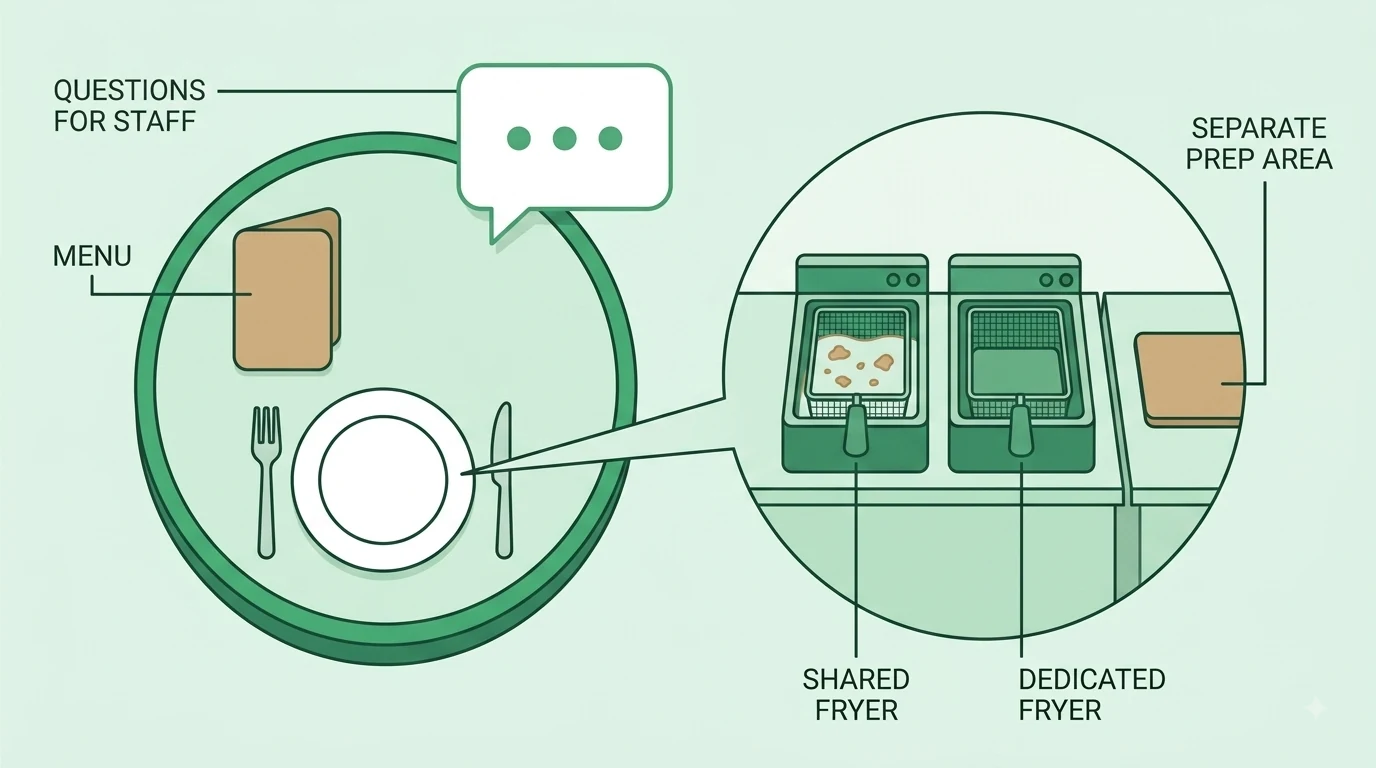
A dish can be made entirely of gluten-free ingredients and still be unsafe, because the surfaces and equipment it touched during preparation may not be. This is called cross-contact — gluten transferring from a gluten-containing food to a gluten-free one, through a shared surface, utensil, or cooking oil.
For someone with celiac disease, this matters as much as the ingredient list itself. The questions below are aimed specifically at catching it.
Questions Worth Asking
- "Do you have a dedicated fryer for gluten-free food?" — Fried food is one of the highest-risk categories. A shared fryer means anything cooked in it — including naturally gluten-free fries — picks up gluten from breaded or battered items cooked in the same oil.
- "Do you cook gluten-free pasta in the same water as regular pasta?" — Shared pasta water is a common, easy-to-miss source of cross-contact.
- "Is this sauce or marinade thickened with flour?" — Sauces, gravies, and marinades are a frequent hiding place for wheat flour.
- "Can this be made in a separate pan, with separate utensils?" — Especially relevant for grilled or sautéed items on a shared flat-top or grill.
- "Is the gluten-free pizza baked in the same oven as regular pizza?" — Pizza ovens are a common source of cross-contact even when the dough itself is gluten-free.
- "Does this have any breading, coating, or added flour I wouldn't expect?" — Omelets are sometimes given added pancake batter for texture. Baked potatoes are sometimes dusted with flour. "Blackened" seasoning can include a flour-based spice blend. None of these are obvious from the dish's name.
Restaurant staff will not always know the answers immediately, and that's fine — a kitchen willing to check is a good sign. A kitchen that brushes off the question, or one where no one seems to understand what you're asking, is a signal to be more cautious with your order, or to choose somewhere else.
Higher-Risk and Lower-Risk Categories
Some categories of food carry more cross-contact risk than others, simply because of how they're typically prepared:
Higher risk:
- Fried foods from a shared fryer
- Pizza from a shared oven
- Pasta boiled in shared water
- Buffets and shared serving stations, where utensils move between dishes
- Sauces, gravies, and soups (frequently flour-thickened)
Lower risk, as a starting point:
- Grilled or roasted meat and fish, prepared simply
- Steamed or roasted vegetables
- Plain rice and potatoes
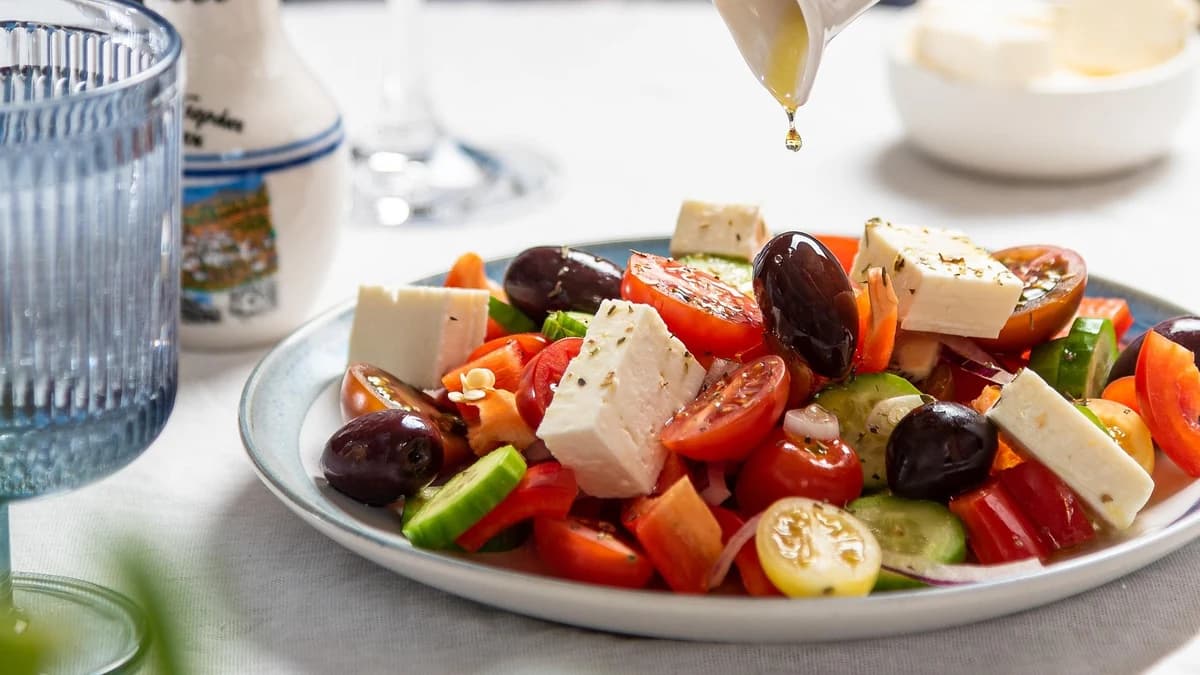
- Salads without croutons or flour-thickened dressing
Simplicity tends to correlate with safety. A dish with fewer components and less shared equipment involved gives the kitchen less opportunity to introduce gluten by accident.
Heat Does Not Neutralize Gluten
It is a common misconception that cooking at high enough temperatures destroys gluten the way heat kills some pathogens. It does not. Gluten is a protein, not a microorganism — frying, grilling, or baking a food does nothing to break down the gluten protein itself. This is why a shared fryer or oven is a genuine risk regardless of cooking temperature or time.
What to Do When the Order Arrives
Confirming the order when it's placed doesn't guarantee it left the kitchen the way you asked. Restaurant kitchens are busy, and mistakes happen even after a clear conversation with the server. If something looks off — a garnish that shouldn't be there, a coating you didn't expect — it is reasonable to ask again or send it back. Eating a dish you're not sure about to avoid seeming difficult is not worth the risk.
Certification Levels, for Context
If a restaurant references a certification, it's worth knowing the numbers behind it. The FDA's "gluten-free" label threshold for packaged food is under 20 parts per million (ppm). Third-party certifiers like GFCO apply a stricter standard — 10 ppm or less — with independent testing behind it. Most restaurant menus do not carry any formal certification at all; the numbers are useful context, not something you'll typically see quoted on a menu.
A Few Practical Habits
- Call ahead for a restaurant you haven't been to before. Asking about celiac accommodation over the phone, before you arrive, gives the kitchen time to think it through rather than answering under pressure.
- Go at off-peak times when possible. A less rushed kitchen is generally more careful.
- Bring a backup snack. Not every restaurant will be able to accommodate you safely, and having something with you removes the pressure to order something you're unsure about.
- Research before you go. Apps and directories built around celiac-safe dining can help you find restaurants with a track record, though they don't replace asking questions once you're there.
Related Articles
- Cross-Contamination, Explained
- Reading Food Labels for Gluten
- Traveling Gluten-Free
- Back to Gluten-Free Guide
Sources
- Celiac Disease Foundation. Dining and Social Eating. https://celiac.org/dining-and-social-eating/ — accessed 20 July 2026
- Beyond Celiac. Cross-Contact. https://www.beyondceliac.org/gluten-free-diet/cross-contact/ — accessed 20 July 2026
- Find Me Gluten Free. How to Order at a Restaurant Safely With Celiac Disease. https://info.findmeglutenfree.com/dining-out — accessed 20 July 2026
- GoodRx. Eating Out With Celiac Disease: Tips for Safe Dining. https://www.goodrx.com/conditions/celiac-disease/eating-out-with-celiac-disease — accessed 20 July 2026
- Gluten-Free Certification Organization. About Us. https://gfco.org/about-us/ — accessed 20 July 2026