Contents
Is mustard gluten-free?
Depends on the mustard. Mustard seeds themselves are gluten-free, and plain mustard is usually safe, but several common specialty styles introduce gluten through the liquid or a thickener, not the seed.
The base case is safe
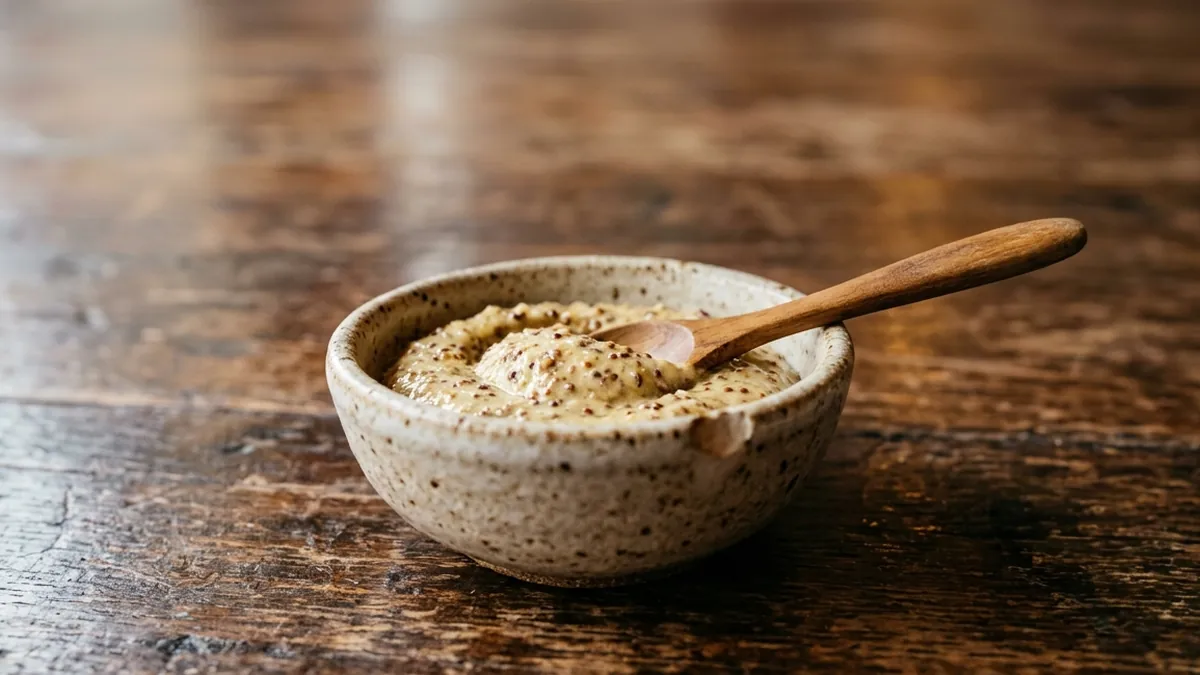
Traditional mustard is mustard seed or mustard powder mixed with a liquid — typically vinegar, water, wine, or verjuice — plus salt and spices. None of those core ingredients are gluten-containing. A short-ingredient-list yellow or basic prepared mustard is the easiest version to trust.
Where gluten actually gets in
- Malt vinegar. The same distinction covered on this site's vinegar page applies directly here: malt vinegar is made from barley and isn't distilled, so it isn't safe, while plain distilled vinegar is fine regardless of the grain it started from.
- Beer. Some specialty and craft mustards use beer or ale as the liquid instead of vinegar. Since most beer is made from barley, this makes the mustard unsafe unless the beer used was specifically gluten-free.
- Wheat flour as a thickener. English mustard in particular is often thickened or bulked with wheat flour, more so than other styles — worth checking specifically if English-style mustard is what's on the table.
- Dijon's liquid. Dijon typically uses wine or verjuice rather than vinegar, which sidesteps the malt vinegar question, but some Dijon and whole-grain formulations still add a wheat-based thickener, so the base style doesn't guarantee safety on its own.
Restaurants are a separate risk
Restaurant condiment bottles are commonly refilled from bulk containers, sometimes with a different product than the label on the bottle suggests. A squeeze bottle labeled "mustard" on a restaurant table isn't a reliable source of ingredient information the way a sealed retail jar is.
Practical guidance
A short ingredient list — mustard seed, vinegar, water, salt, spices — is the fastest way to a safe mustard without further checking. For English mustard, beer mustard, or anything labeled "gourmet," read the ingredient list specifically for wheat flour, malt vinegar, or beer before assuming it's safe.
FAQ
Is yellow mustard gluten-free? Usually, yes — it's typically just mustard seed, vinegar, water, and turmeric.
Is Dijon mustard gluten-free? Usually, since it's wine-based rather than vinegar-based, but check for added wheat flour in whole-grain or specialty versions.
Is English mustard gluten-free? Not reliably — wheat flour is a common thickener in this style specifically, more so than in other mustards.
Sources
- Celiac.com, "Is Mustard Gluten-Free? What People with Celiac Disease Should Know"
- Gluten Free Society, "A Gluten Friendly Guide to Mustard"