Contents
Last reviewed: 2026-07-21
The Short Answer
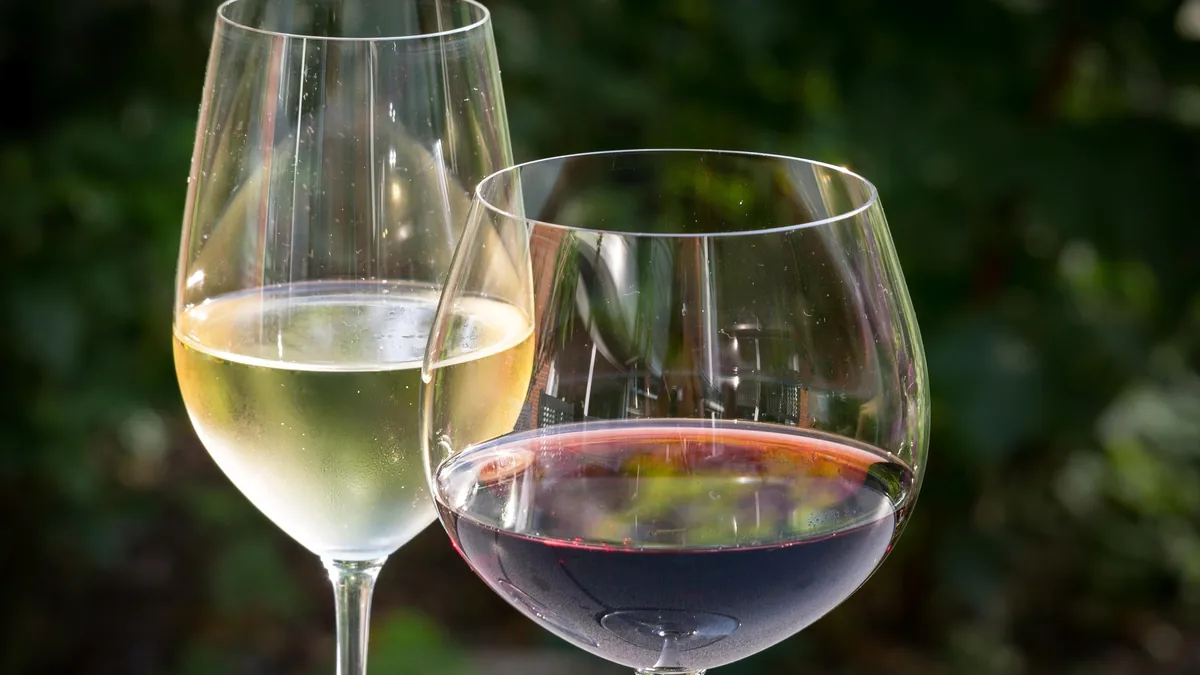
Yes. Wine is fermented from grapes, and neither grapes nor the yeast used in fermentation contain gluten. Standard red, white, rosé, and sparkling wines — Bordeaux, Cabernet Sauvignon, Chardonnay, Chianti, Malbec, Merlot, Pinot Grigio, Pinot Noir, Riesling, Champagne, Prosecco, and the rest — are all naturally gluten-free.
The two things worth knowing about relate to how wine is finished and aged, not to the grapes themselves.
Fining Agents
After fermentation, many wines go through a process called fining, where a substance is added to bind with unwanted particles so they can be filtered out, leaving the wine clearer. A small number of fining agents are derived from wheat, such as hydrolyzed wheat gluten. If one of these is used, trace gluten can theoretically remain in the finished bottle.
In practice, studies on this have found that even wines fined with a gluten-containing agent typically come in well under the 20 parts per million threshold the FDA uses to define "gluten-free." For most people with celiac disease, this isn't a meaningful risk. If you're highly sensitive, look for wines described as unfined, natural, or vegan, since these typically skip animal- or gluten-based fining agents entirely.
Oak Barrels
Some winemakers, mostly using more traditional methods, seal oak barrels with a wheat-flour paste. This is far less common than it once was, and where it's still used, the amounts of gluten that leach into the wine during aging are consistently reported as very small. If you want to rule this out entirely, wines aged in stainless steel rather than oak sidestep the question completely.
What Isn't Just "Wine": Coolers, Cocktails, and Flavored Wine Drinks
This is the category to actually be careful with. Wine coolers, flavored wine beverages, and wine-based cocktails often include added colors, flavorings, or stabilizers, and some rely on barley malt for sweetness or fizz — an ingredient that does contain gluten. These products are wine-adjacent, not wine, and shouldn't be assumed safe just because the label says "wine" somewhere on it. Dessert and fortified wines (port-style or otherwise flavored wines) fall into the same more-cautious category. A plain bottle of table wine is a very different product from a flavored wine cooler, even though both are regulated in similar ways.
Who Actually Regulates This
In the US, standard wine (7% ABV or higher) falls under the Alcohol and Tobacco Tax and Trade Bureau (TTB) rather than the FDA, though the TTB has aligned its "gluten-free" labeling rules with the FDA's standard. Wine under 7% ABV, along with hard cider, falls under FDA jurisdiction directly. Either way, a "gluten-free" claim on a wine label means it meets the same 20 ppm threshold used across the rest of the food system.
Related Articles
Sources
- Beyond Celiac. Is Wine Gluten-Free?. https://www.beyondceliac.org/gluten-free-diet/is-it-gluten-free/wine/ — accessed 21 July 2026
- National Celiac Association. Alcohol on the Gluten-Free Diet. https://nationalceliac.org/alcohol-on-the-gluten-free-diet/ — accessed 21 July 2026
- U.S. Food and Drug Administration. Questions and Answers on the Gluten-Free Food Labeling Final Rule. https://www.fda.gov/food/nutrition-food-labeling-and-critical-foods/questions-and-answers-gluten-free-food-labeling-final-rule — accessed 21 July 2026